
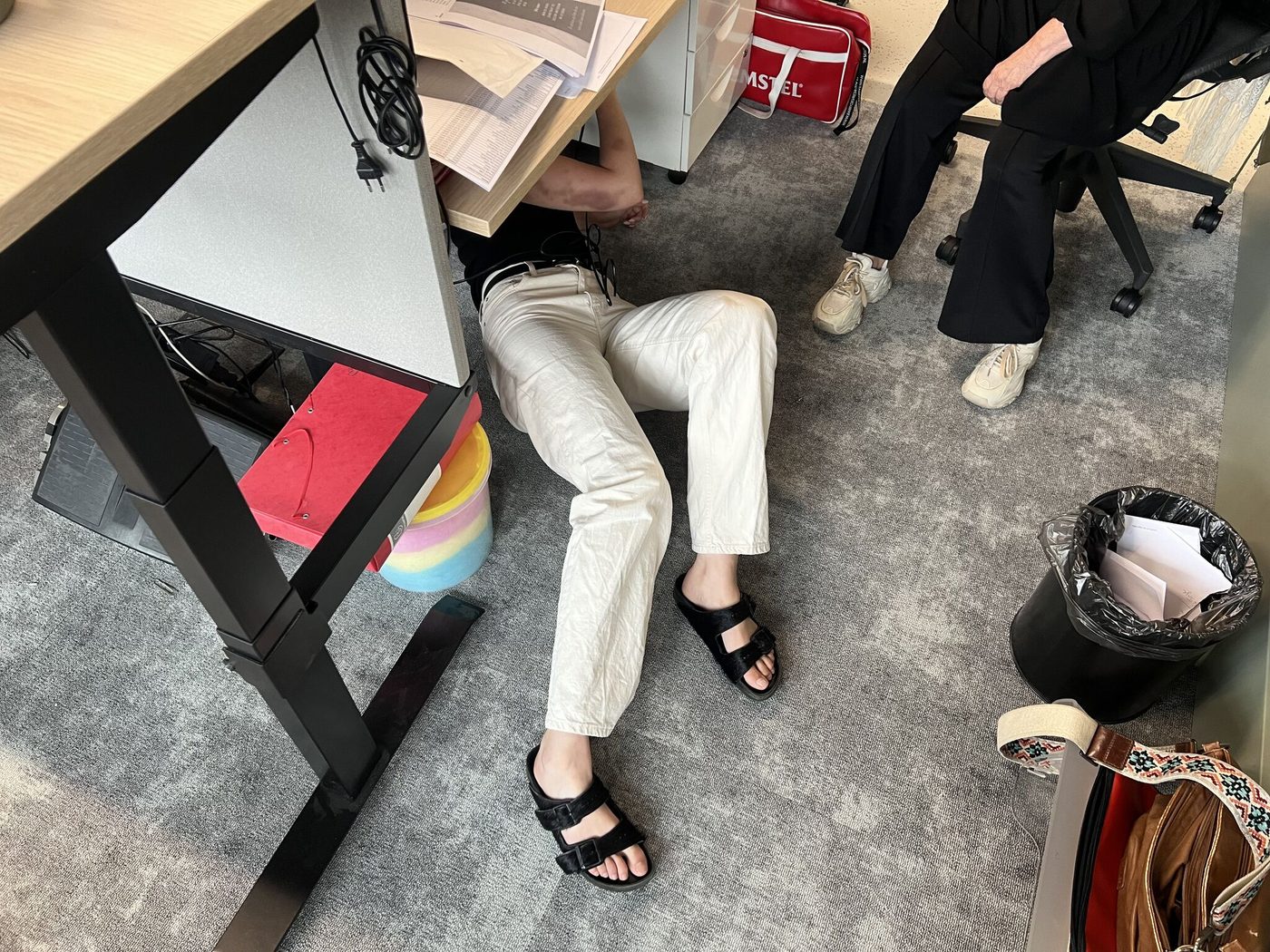
Since 2005, the Dutch Working Conditions Act (Arbowet) requires every company in The Netherlands with more than 25 employees to appoint a health and safety officer (in Dutch: “preventiemedewerker“). In my view, a health & safety officer can play an important role when it comes to ergonomic advice. But there’s also things they shouldn’t do.
In this post, based on my experience, I explain the (considerable) value of having a health and safety representative. I also advise against deploying them to give advice to colleagues working from home or suffering from issues.
What does a health and safety officer do?
A health and safety officer is a member of staff responsible for health and safety in the workplace. Their exact responsibilities depend on the size of the company. In The Netherlands they have at least three legal tasks:
- Helping to draw up the risk inventory and evaluation (RI&E), often together with an expert.
- Advising on good working conditions policy, together with occupational health (Arbo) and safety experts.
- Carry out the health and safety measures at work.
Employees who are also health & safety officer usually do this alongside their “normal day job”. Training a prevention officer is not legally required, but (fortunately) most companies do invest in a short course.
The health & safety officer is important!
A health and safety officer (or ergonomics champion) who is present on the work floor can play a crucial role in identifying issues relating to ergonomics. Do people actually use the external keyboard and mouse they’ve been given? Do colleagues take the time to adjust their chairs properly? Are there any broken chairs? These are often practical matters that are difficult for an external expert – who is often only present sporadically – to check.
Ideally, a health and safety representative should act as a point of contact who can pass on concerns to the employer. And as an employer, by taking the role of the health and safety representative seriously, you show that you prioritise health and safety.
But for general workplace advice only
In my view, ergonomic champions and colleagues who have completed a short training in ergonomics are often given too much responsibility. They usually have no medical background and should not be expected to provide anything more than general advice.
The ‘ideal’ sitting posture they are taught is often explained using images like these. This is the way they identify when colleagues may not be sitting correctly:
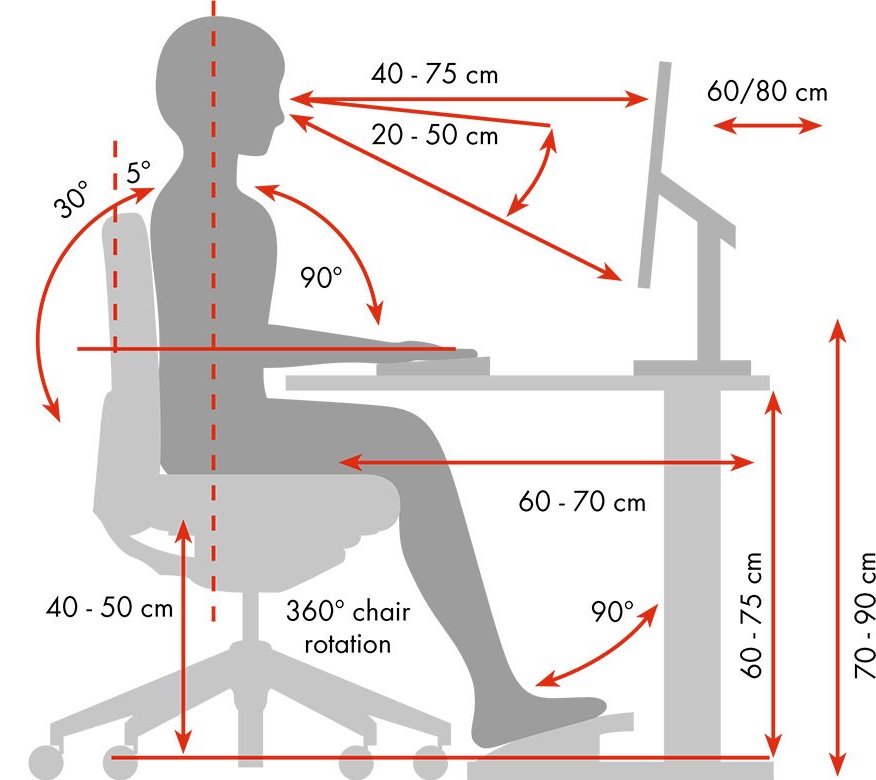
The “ideal posture”
No one – but particularly people who have (or have had) physical complaints – should blindly follow ‘ideal sitting posture’ illustrations. Advice from colleagues with little or no training may, at best, be of little value, but at worst, it can actually be harmful.
Physical Issues? Home workstation? Find an ergonomist
I think a health and safety officer should only be called upon to provide advice in the workplace. And not for home working set-ups, where workstations are often not ‘standard’ and where creative advice from an ergonomist is essential. In that case, I advise an online ergonomic workstation assessment.
If a colleague is experiencing physical issues, I would also strongly advise bringing in an ergonomist. It can be tempting to offer some generic advice, but in plenty of cases these tips can lead to worsening issues.
Physical symptoms often have a psychological cause, which can be difficult for (in-house) health and safety officers to identify or discuss. An external expert is typically better placed to bring psychological issues to light more easily and effectively.