

I screen applications from employees who want my clients to reimburse computer glasses (a.k.a . monitor glasses or PC glasses). In an online session (€75, 45 minutes) I assess whether computer glasses are really a solution for the complaints the employee is experiencing. I often find other solutions, which saves costs.
Before clients (like Odido, Universal Music and Lloyds Bank) started working with me they reimbursed all costs (an average of €350) without checking whether PC glasses were the right solution. Clients save a lot of money if computer glasses turn out not to be necessary after all. And that happens regularly.
My clients like saving costs of course, but the employee is usually happy too. They don’t have to go to the optician and don’t need to wear glasses 😀. In my sessions I also share many tips that I also share during an online ergonomic workstation assessment. Colleagues often work more pleasantly after a session. Most employees no longer need a workstation assessment after a computer glasses screening.
What are computer glases?
The moment you start seeing less sharply at short distances, display glasses can help you keep doing your job well. Computer glasses allow you to see sharply near (the keyboard) and far (to the screen).
Monitor glasses have made a huge advance. Most major eyewear chains have launched easily findable websites or even a separate brand (like Hans Anders’ Seeh program). They motivate and make it as easy as possible for employees to apply for display glasses. This is where opticians make good money!
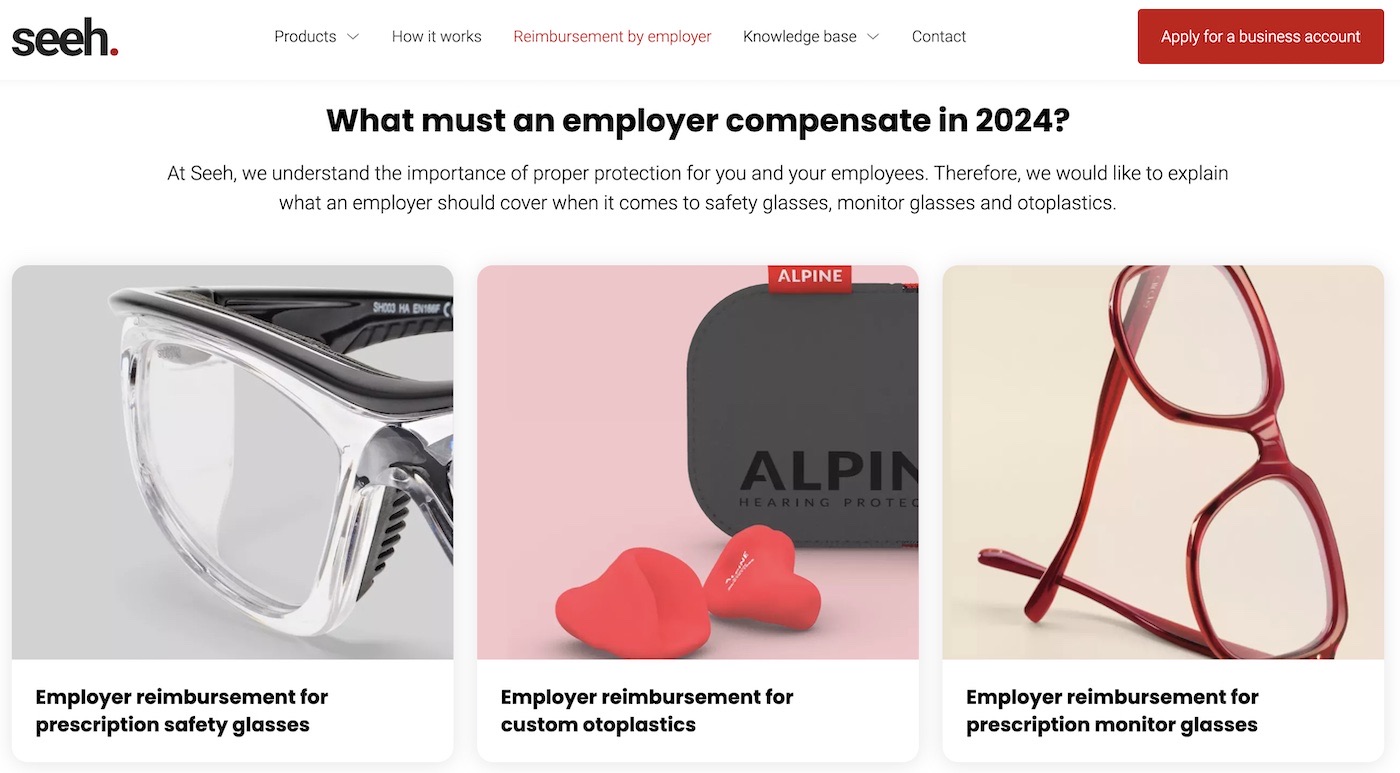
Should an employer reimburse computer glasses?
The Working Conditions Act (arbowet) in The Netherlands stipulates that employees who need monitor glasses to perform their work are entitled to compensation. As far as I know, there is no legal minimum stipulated in the law. My clients pay an average of €350 back to their employees. The Dutch government reimburses civil servants (in 2024) a maximum of €251. I also know of companies that reimburse computer glasses expenses up to €750.
Screen glasses are not always necessary
I’ve experienced that there are often misunderstandings about when display screen glasses are necessary – or useful. For example, some people I speak to think they can be reimbursed for glasses with blue filters (which I think are pretty useless anyway) without a prescription. This is usually not the case.
And often, screen glasses aren’t necessary because the root of the problem is something different. Like:
- No proper lighting (daylight and/or artificial light) in and around the workplace
- Screen settings (contrast, brightness, colour temperature, etc)
- Annoying light reflection on the monitor(s)
- Tension/stress
- Bad air quality of the workspace
- The distance and height between eyes and monitor(s) can be adjusted
- People blink too little or don’t look away from the screen often enough
If I conclude that monitor glasses may not be necessary, I agree with the employee that they first follow my tips and see how they do without them for a few weeks.
Sometimes it is clear that monitor glasses are necessary, and the process of reimbursement can be initiated. Even then, my tips can help them work more comfortably and without complaints.
I take the entire process off your hands, from planning (employees book an appointment in their calendar themselves via my website) to reporting of results.
Can I help your organisation?
Interested in a standard “screening” of employees who want to apply for reimbursement for monitor glasses? I charge €75 for a 45-minute session for this.
Drafting a policy on display screen glasses? Get in touch with me. I will be happy to help you with tips.a